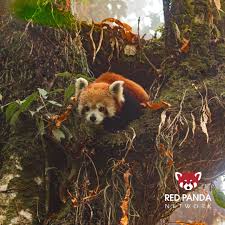
Red Pandas
Welcome to the world of red pandas. Nestled high among the misty forests of the Himalayas and the bamboo groves of eastern Asia, the red panda is a creature of quiet wonder. Draped in deep auburn fur and marked by its iconic ringed tail, this elusive creature moves with an almost dreamlike grace through the canopy, rarely seen but always felt by those who wander close enough to listen. More than a symbol of beauty, the red panda stands as a gentle reminder of the fragile harmony that connects every living thing to the forests they call home.

This site is a place to celebrate everything about red pandas – their beauty, their mystery, and their importance to the natural world. Here, you can explore photos and fun facts that bring you closer to these amazing animals. Whether you're here to learn something new, find inspiration, or simply enjoy their adorable faces, we hope this page helps you appreciate how special red pandas truly are. Here, you'll find out about their hidden world, glimpses into their delicate habitats, and reflections on the balance they bring to the wild places they call home. Take a moment to explore, share, and be part of the effort to keep their world safe for generations to come.
History
Hidden within the high mountain ranges of Asia, the red panda has a story that stretches back millions of years. Fossil evidence suggests that their ancestors once roamed across Europe and North America, long before settling in the bamboo-filled forests of modern-day Nepal, Bhutan, China, and Myanmar. Unlike their black-and-white namesake, the giant panda, red pandas belong to their own unique family, Ailuridae, making them a one-of-a-kind survivor in the animal kingdom. Early naturalists were captivated by their foxlike face, fiery coat, and catlike grace, but for many years, scientists debated where exactly they belonged in the tree of life—were they raccoons, bears, or something entirely different? Today, genetic research confirms that the red panda stands alone, an ancient lineage that has endured the shifting climates and landscapes of time.

within the high mountain ranges of Asia, the red panda has a story that stretches back millions of years. Fossil evidence suggests that their ancestors once roamed across Europe and North America, long before settling in the bamboo-filled forests of modern-day Nepal, Bhutan, China, and Myanmar. Unlike their black-and-white namesake, the giant panda, red pandas belong to their own unique family, Ailuridae, making them a one-of-a-kind survivor in the animal kingdom. Early naturalists were captivated by their foxlike face, fiery coat, and catlike grace, but for many years, scientists debated where exactly they belonged in the tree of life—were they raccoons, bears, or something entirely different? Today, genetic research confirms that the red panda stands alone, an ancient lineage that has endured the shifting climates and landscapes of time.

Habitat
The red pandas thrive in the forests of the Eastern Himalayas, where there lie mist, moss, and towering trees. These elusive creatures remain between elevations of 2,200 to 4,800 meters (7,000 to 15,700 feet), where dense bamboo thickets carpet the forest floor and ancient firs and oaks reach toward the clouds. The air here is cool and humid, a perfect match for their thick, russet coats that protect them from mountain chills. Red pandas are arboreal by nature, spending much of their time among the branches where they find safety, rest, and food. The trees also provide natural pathways through the forest, allowing them to move gracefully while avoiding predators. These environments are rich in biodiversity, supporting countless other mountain species that, together, create a delicate, interdependent ecosystem.

Their diet revolves almost entirely around bamboo, a resource that demands constant attention and patience. Though they are classified as carnivores, red pandas have evolved to thrive on a largely vegetarian diet, consuming tender bamboo leaves and shoots as their staple food. They supplement this with berries, fruits, acorns, roots, and occasionally small insects or bird eggs for extra nutrients. Because bamboo is low in calories and nutrients, red pandas must eat large quantities—sometimes up to 20,000 leaves in a single day. This slow and steady feeding shapes much of their lifestyles, as they rest often to digest their fibrous meals. In essence, the red panda's existence is a quiet harmony with its environment, a testament to adaptation and endurance in one of the world's most breathtaking yet challenging habitats.
Facts
- Before the giant panda was even known to science, the red panda carried the name. Discovered in 1825, it was the first species ever called “panda.”
- Red pandas belong to their own unique family, Ailuridae. They arent closely related to giant pandas, raccoons, or bears — they stand alone on the evolutionary tree.
- Though classified as carnivores, red pandas eat mostly bamboo — up to 20,000 leaves a day! They also enjoy fruits, berries, and the occasional insect.
- Red pandas are expert climbers, spending most of their lives in trees. Their strong claws and flexible ankles help them descend headfirst from branches — a rare skill in the animal world.
- Weighing only 7 to 14 pounds (3 to 6.5 kg), these agile creatures are about the size of a house cat, with a tail nearly as long as their body for balance and warmth.
- Theyre mostly nocturnal and solitary, exploring the forest alone and marking territory with scent glands and subtle chirps or whistles.
- Their thick reddish fur and fluffy tails help them survive chilly mountain nights. In winter, they wrap their tails around themselves like cozy scarves.
- Fewer than 10,000 red pandas remain in the wild. Conservation efforts across Asia work to protect their forests and restore safe habitats.
- They live high in the Eastern Himalayas, among cool, misty forests filled with bamboo, moss, and ancient trees — a habitat as peaceful as it is fragile.
The Original Panda
A Family of One
Bamboo Specialists
Life in the Trees
Small but Mighty
Quiet and Solitary
Built for the Cold
Endangered Treasures
Mountain Dwellers
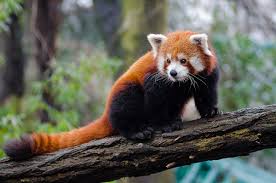
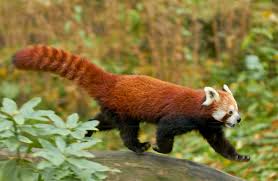
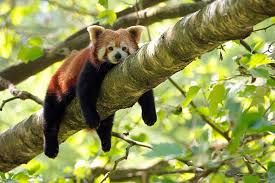
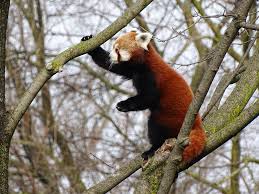
Red Panda Gallery
Photos of Red pandas captured in the wild
Click on image to view suprise image!